Goddess of the Market: Ayn Rand and the American Right

Goddess of the Market
amazonIcon oxfordIcon

"Burns’ clear, crisp writing and piercing insights into Rand and her motivations make this eminently readable biography a must-read not only for Rand devotees but for anyone interested in the merging of literature and politics."

- Booklist (starred review)

Worshipped by her fans, denounced by her enemies, and forever shadowed by controversy and scandal, the novelist and philosopher Ayn Rand was a powerful thinker whose views on government and markets shaped the conservative movement from its earliest days. Drawing on unprecedented access to Rand’s private papers and the original, unedited versions of Rand’s journals, Jennifer Burns offers a groundbreaking reassessment of this key cultural figure, examining her life, her ideas, and her impact on conservative political thought.


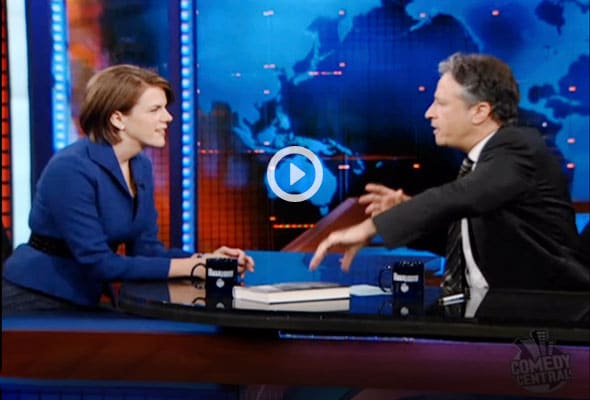
Watch Jennifer Burns on the Daily Show with Jon Stewart


The Daily Show With Jon Stewart Mon - Thurs 11p / 10c
Jennifer Burns
www.thedailyshow.com
Daily Show
Full Episodes
Political Humor Health Care Crisis
 
In the Rand Archive, Part 6: On the Brandens, Continued
February 21 2010

In my last posting, I discussed a few minor inaccuracies I discovered in Barbara Branden’s memoir The Passion of Ayn Rand.  Did I find any inaccuracies in Nathaniel Branden’s memoir Judgement Day: My Years with Ayn Rand (later revised and republished as My Years with Ayn Rand)?

This question in itself is a difficult one to answer, as a memoir is by its nature subjective and personal.  I did discover material that corroborated several aspects of Branden’s narrative – changes in his personality after he met Rand, the circumstances surrounding his move from Los Angeles to New York, his early relationship with Barbara.  The paper trail largely vanishes when all three moved to New York.  However, there is plenty of material in the archive documenting the repressive atmosphere that developed at New York NBI during the 1960s.  New York NBI is also described in great detail by a number of published and unpublished sources that are not held in the Archive.  Again, Branden’s memoir covers all this territory and he is quite frank in describing his role.

I did not discover any evidence that suggested his memoir was deliberately fabricated or untrue.  Working in the archive did, however, help me recapture the perspective of Rand.  By his own testimony, Nathaniel Branden acted poorly towards Rand, but because the story is told from his point of view in his two memoirs, it can be easy to lose sight of this truth.

But what of the affair and the aftermath?  Did I see Rand’s notes on the ending of the affair? Are these available to researchers?

Read more